




Payload capacity
Payload ratings of 170 kg when standing and 100 kg during continuous walking show that the platform is suited to different operating modes in heavy-payload projects.
QUADRUPED ROBOTS · GALILEO
Heavy-duty quadruped platform for transport and field equipment integration.
GALILEO S1 is a heavy-duty quadruped platform in the payload-carrying class. With payload capacities of 170 kg when standing and 100 kg while walking, and a dual-battery operating setup, it is suitable for field applications.
SELECT BY TASK
GALILEO S1 is a heavy-duty quadruped platform designed for payload-carrying applications. Its body structure and mounting surfaces are suitable for directly integrating field equipment such as sensor towers, measurement enclosures or material-handling systems. A payload capacity of 170 kg when standing and 100 kg while walking, 3,5–5 hours of operation with the dual-battery power pack, and the ability to continuously climb 30 cm steps and traverse an 80 cm forward height difference make it possible to cross construction-site and facility obstacles without having to look for vehicle routes.
PRODUCT-SPECIFIC
Features compiled from source product information; evaluate according to the model and configuration.
Payload ratings of 170 kg when standing and 100 kg during continuous walking show that the platform is suited to different operating modes in heavy-payload projects.
According to the source information, the dual-battery power pack provides 3,5–5 hours of operation and supports autonomous charging.
Continuous 30 cm step climbing and traversal of an 80 cm forward height difference make it possible to overcome elevation changes at construction sites and within facilities without having to look for vehicle routes.
The body and mounting surfaces are suitable for directly mounting sensor towers, measurement enclosures or material-handling systems.
SOURCED PRODUCT DATA
Values are taken from the source product page. Confirm the package, software, and accessory contents against the manufacturer's current documentation before ordering.
| Feature | Value |
|---|---|
| Dimensions (standing) | 1200 x 550 x 650 mm (length x width x height) |
| Weight | 118 kg |
| Payload capacity (upright) | 170 (maximum payload when standing) |
| Payload while walking | 100 (during continuous walking) |
| Maximum speed | 0-3,5 m/s (adjustable) |
| Climbing angle | ≥30° |
| Obstacle and step | 30 cm continuous step; 80 cm forward height difference |
| Battery capacity | 3540 Wh |
| Battery | 59 V 60 Ah (3540 Wh, dual battery); autonomous charging supported |
| Battery voltage | 59 V |
| Operating time | 3,5-5 hours |
| Processor | Low-power ARM-based processor (8 cores 8 threads, 8 GB RAM, 64 GB SSD) and x86 processor |
| Software features | Dual-band Wi-Fi 6; mobile app; external Ethernet, USB 3.0 and RS485 interfaces; 48 V and 24 V external power output |
| Protection rating | IP67 |
| Operating temperature | -20°C to 55°C |
PRODUCT INFORMATION SOURCES
This catalog is intended to help explore product information. No commitments are made on behalf of Robotik Çözümler regarding stock, authorized dealers, pricing, warranty, or after-sales service terms.
FREQUENTLY ASKED QUESTIONS
According to the stated values, the 170 kg capacity applies when standing; the permitted limit during continuous walking is 100 kg. These values define different operating modes and should be considered separately in project planning.
According to the source information, S1 offers the ability to continuously climb 30 cm steps, overcome an 80 cm forward height difference, and operate within a range suited to site conditions, making it suitable for construction site applications.
According to the source information, the dual-battery 3540 Wh pack provides 3,5–5 hours of operation; autonomous charging support can be used for shift planning.
IN THE SAME CATEGORY
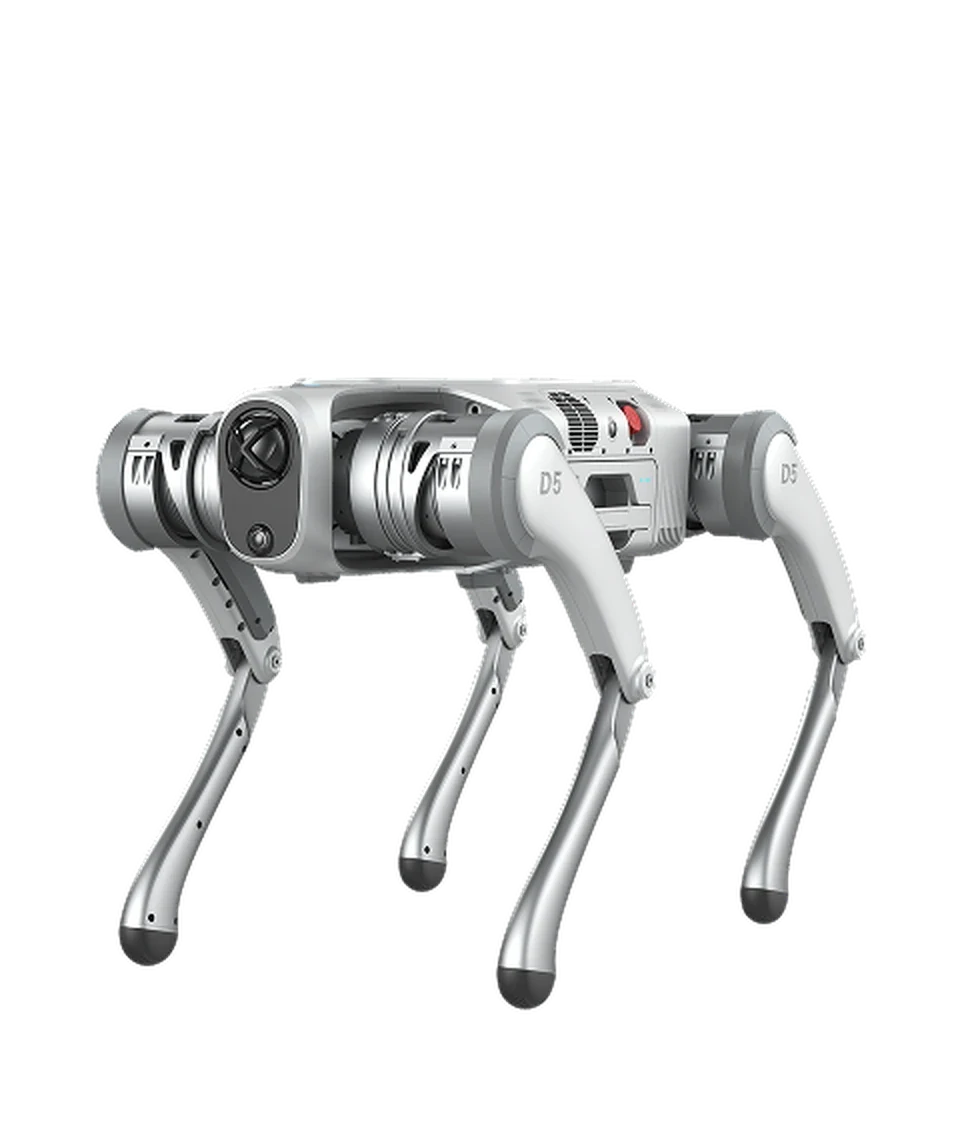 Quadruped robots
PUDU
Industrial autonomous quadruped robot for challenging environments
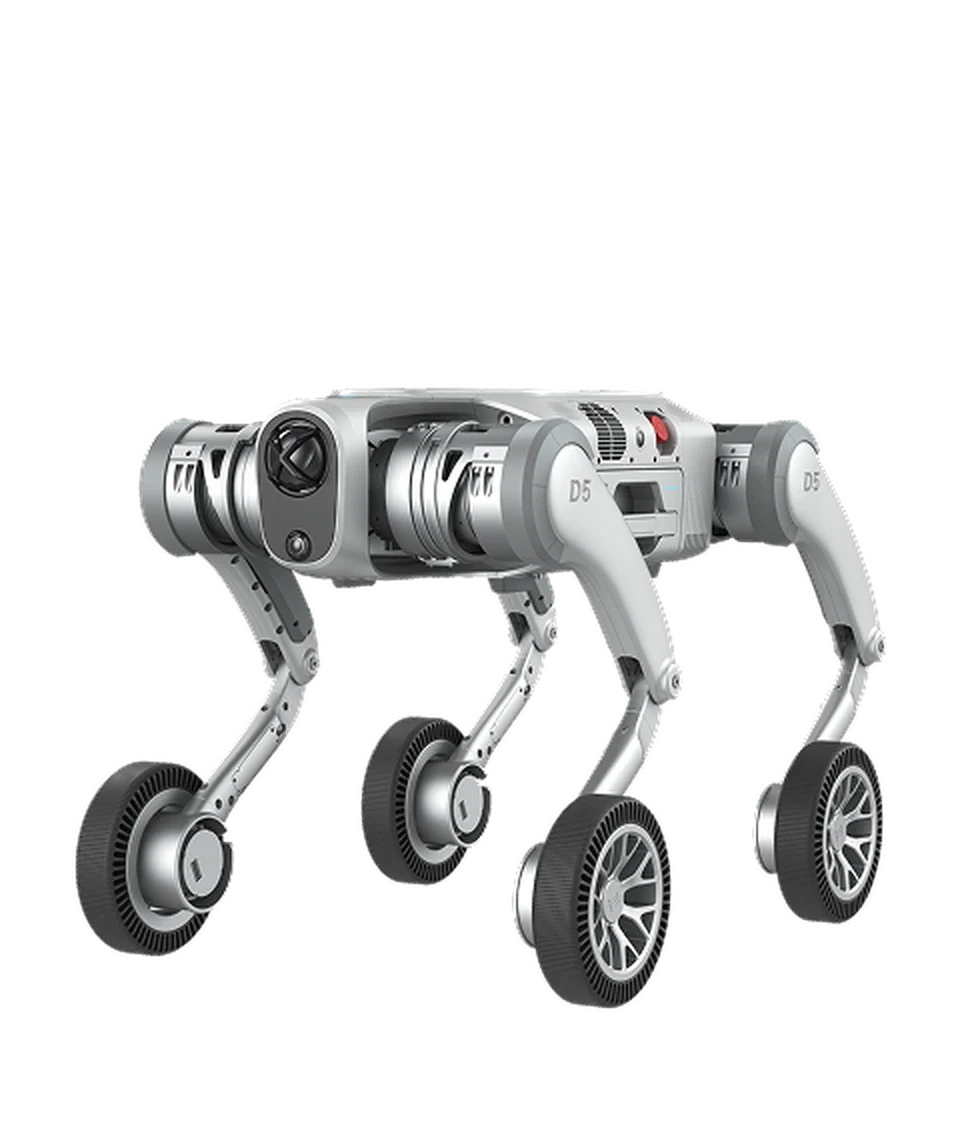 Quadruped robots
PUDU
Industrial-grade autonomous quadruped robot
 Quadruped robots
Unitree
Compact size, industrial capability
NEXT STEP
Start by defining your work area, task, and integration requirements.