




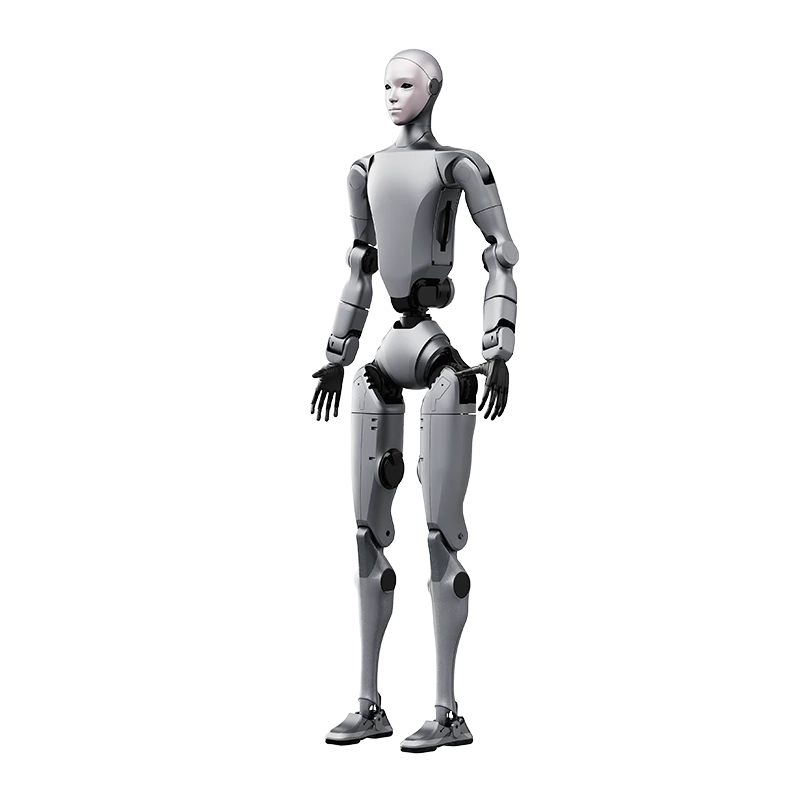
High-performance humanoid robot
Multiple humanoid body options featuring in-house actuators, gear reducers, encoders, and sensors.
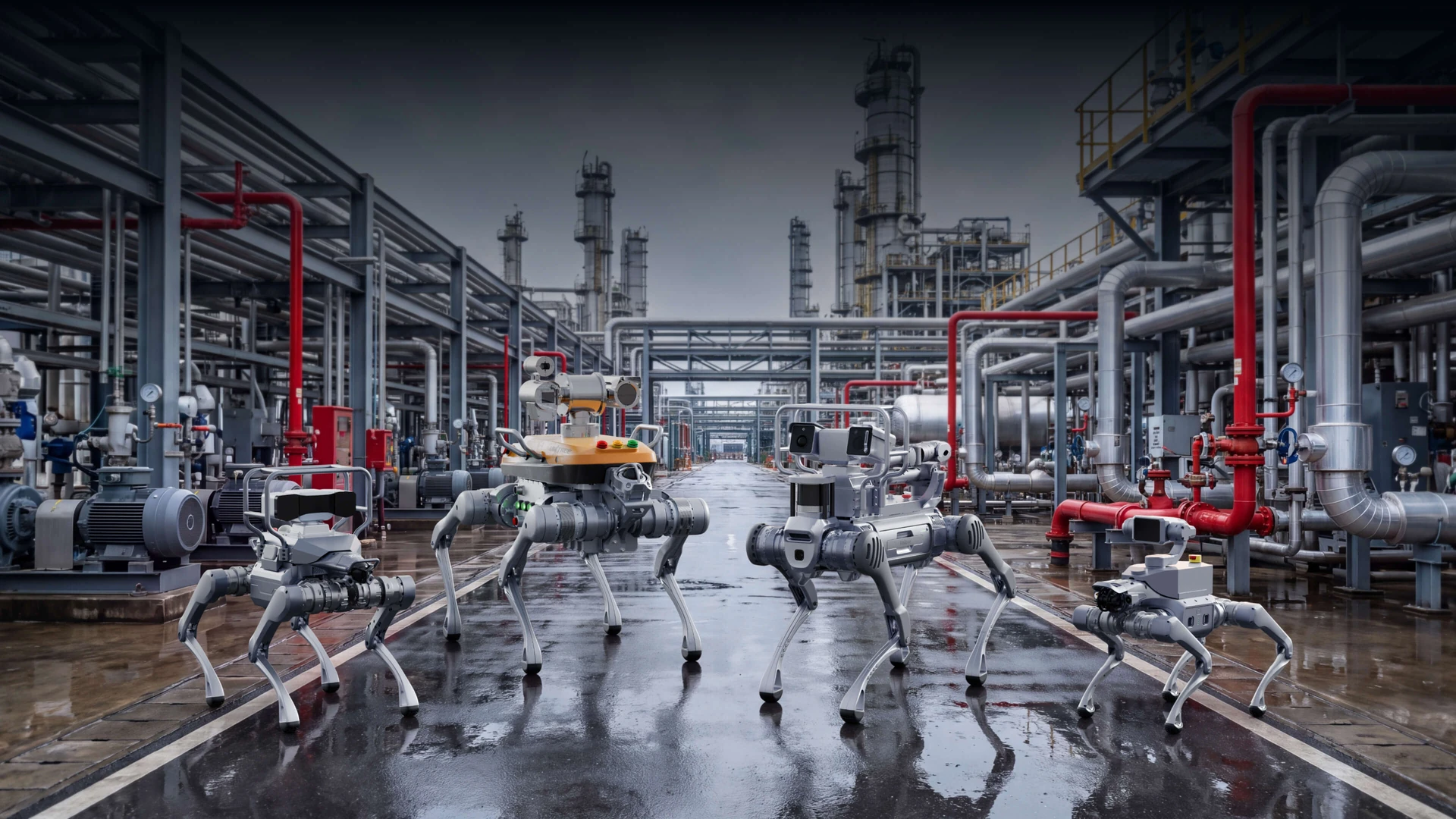
UNITREE · Humanoid robots
End-to-end platform for humanoid robots: data and training
An integrated platform spanning robot hardware, data collection, model training, and deployment on real robots.
The G1-D solution brings the robot body, data acquisition tools, and model training/inference infrastructure together on a single platform.
Multiple humanoid body options featuring in-house actuators, gear reducers, encoders, and sensors.
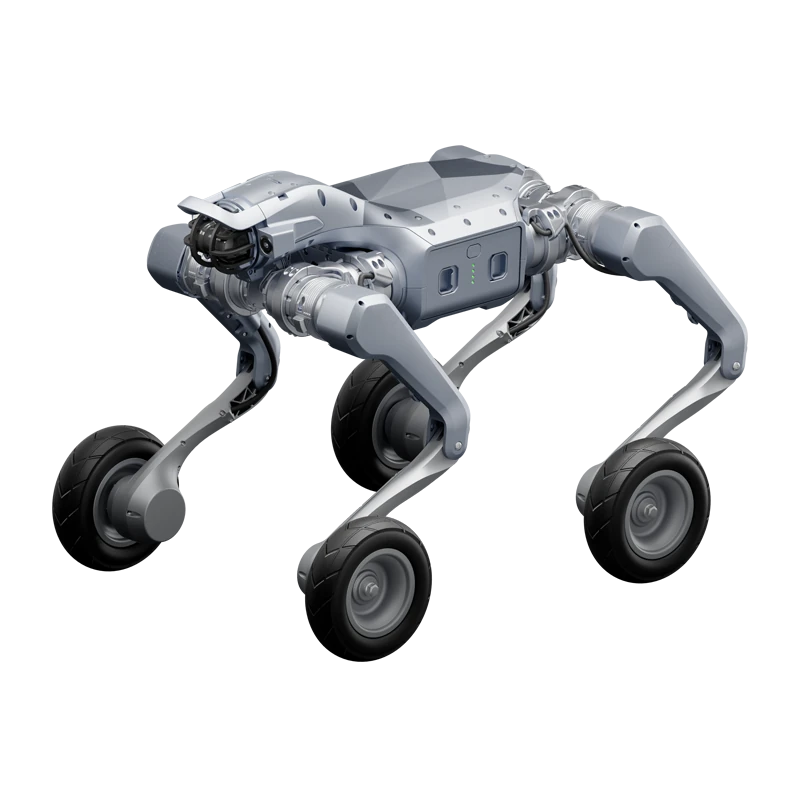
A unified data pipeline covering acquisition, processing, labeling, review, and data asset management.
Distributed training, custom model development and deployment; support for popular open-source frameworks.
The manufacturer lists a total of 19 degrees of freedom (excluding the end effector): arms 7×2, waist 2, column 1, and base 2 DOF. The mobile lifting design combines a wheeled base with vertical movement; the vertical workspace is 0–2 m. The waist range of motion is ±155° on the Z axis and −2,5° to +135° on the Y axis. Lifting accuracy is listed as ±0,5 mm, end-effector gripper accuracy as ±0,1 mm, teleoperation latency as less than 100 ms, and the sampling rate as 60 Hz. Accuracy may vary depending on the end-effector configuration.
Total degrees of freedom, excluding the end effector.
Combined total for both arms; 7 DOF per arm.
Waist 2, column 1, and base 2 degrees of freedom.
Vertical reach provided by the mobile lifting design.
Teleoperation latency and sampling rate.
Accuracy values vary depending on the end-effector configuration. This capability overview describes the 19 DOF configuration; the table below lists separate values for the Standard variant.
Aims to simplify data collection and reduce costs through flexible, standardized workflows, moving beyond traditional manual processes. Visual template management combines project management, task assignment, progress tracking, and status analysis; tasks can be created from a template with one click. Multiple robot platforms and end effectors are supported; standardization aims to process data from various devices end to end into high-quality data for model training. The high-concurrency architecture is described as supporting simultaneous data collection by hundreds of robots. The high-availability service architecture aims to enable 24/7 data collection and convert data into widely used training formats.
Projects, task assignments, progress, and status analysis in one interface; create a task from a template with one click.
Standardizes data from various robots and end effectors and converts it into training data.
Described as capable of receiving and processing data streams from hundreds of robots through load balancing and concurrent scheduling.
High availability, format compatibility, and output/conversion to widely used training formats.
Presented by the manufacturer as a platform capability; these are not service-level commitments made by Robotik Çözümler.
The six-stage data collection workflow listed by the manufacturer.
Start a new data collection job.
Edit task settings and assign it to a responsible person.
Collect and label robot data.
Upload and review the collected data.
Store approved data.
Export data for subsequent use.
Provides an end-to-end workflow from data processing to one-click model deployment and integrates with widely used open-source robotics model frameworks. Describes integration with open-source models such as PI and GROOT, training with community/open datasets, and a high-accuracy 3D asset library and simulation environment for algorithm validation. Aims for out-of-the-box deployment, one-click training, and sim-to-real transfer. The distributed training infrastructure flexibly schedules compute tasks and accelerates them in parallel; the manufacturer states that GPU utilization can reach up to %90.
Community and open datasets; deep integration with models such as PI and GROOT.
Algorithm validation scenarios with high-accuracy 3D assets and realistic environments.
Aims for one-click training, integrated simulation, and transfer from algorithm to real machine.
Flexible task scheduling and parallel acceleration; scales according to resource load.
The %90 GPU utilization figure for Unitree G1-D is a claim on the manufacturer's page; it is not an independent performance guarantee.
Model development, evaluation, and deployment sequence.
Determine the model structure to be used.
Set training parameters.
Track the training process.
Edit model parameters.
Test the model in a simulated environment.
Export the trained model and put it into deployment.
The manufacturer's page lists application areas under four headings.
Scenario shown for service applications.
Scenario for living environments.
Retail application scenario.
Industrial application scenario.
UnifoLM-WMA-0 is presented as Unitree's open-source world model-action architecture, designed for general-purpose robot learning and covering different robot embodiments. Its core world model aims to understand physical interactions between a robot and its environment. In decision mode, it predicts future interactions based on the environmental state and task goals; these predictions assist the action policy, aiming to reduce decision errors and improve movement accuracy. In simulation mode, it generates high-accuracy environmental feedback in response to robot motion inputs; synthetic data supports model training and policy optimization.
Predicts physical interactions based on the state and task goals, helping the policy module generate actions.
Supports the training/optimization process by generating environmental feedback and synthetic data in response to motion input.
The manufacturer compares the G1-D Standard and G1-D Ultimate variants. The table should be retained with its headings for mechanical dimensions, base, electrical specifications, accessories, and other items.
| Variants | G1-D Standard | G1-D Ultimate |
|---|---|
| Overall dimensions, column at minimum height | 1260×620×620 mm | 1260×525×570 mm |
| Overall dimensions, column at max. height | 1680×620×620 mm | 1680×525×570 mm |
| Total weight (including battery) | 90 kg | 90 kg |
| Total DOF (excluding end effector) | 17 | 19 |
| Single-arm DOF (excluding end effector) | 7 | 7 |
| Maximum payload per arm [1] | Approx. 3 kg | Approx. 3 kg |
| End-effector options [2] | Same options | Same options |
| Waist DOF / joint range of motion | 2 / same range | 2 / same range |
| Column lifting speed | 60 mm/s | 60 mm/s |
| Maximum movement speed | Not specified (/) | 1,5 m/s |
| Chassis drive type | Not specified (/) | Differential drive |
| Chassis sensors | Not specified (/) | LiDAR ×1 + depth camera ×2 + collision sensor ×2 + low-obstacle sensor ×2 |
| Base computing power | 8-core CPU | 8-core CPU |
| Perception sensors | Same | Same |
| Wi‑Fi 6, Bluetooth 5.2 | Yes | Yes |
| High-computing-power module | Various options | Various options |
| Battery | Upper body 9 Ah + chassis 30 Ah |
| Manual control unit / visualization computer | Yes / Yes | Yes / Yes |
| Battery operating time | Approx. 2 hours | Approx. 6 hours |
| Smart OTA upgrade / secondary development [3] | Yes / Yes | Yes / Yes |
[1] The arm's maximum payload can vary significantly depending on the arm extension posture. [2] End-effector selection depends on the configuration. [3] Refer to the manufacturer's development guide for details on secondary development. The manufacturer also states that parameters may vary by scenario/configuration, that a safe distance should be maintained because of the robot's powerful and complex design, that the appearance may change, and that some sample functions are in the development/testing stage. Do not present any warranty or sales terms here as a company promise.
The manufacturer describes this product as a civilian-use robot; it requires that hazardous modifications or use be avoided, local laws be followed, and a sufficient safe distance be maintained between the robot and people. The product appearance and parameters may change; some sample functions may be in the development and testing stage.
This is a manufacturer statement and safety warning; it is not a warranty or performance commitment from Robotik Çözümler.
Let's evaluate your model selection and application needs together.